
Inspection and Estimate
We come out, get on the roof, and tell you what we see. No vague reports, no pressure. You'll know what needs to be done and roughly what it costs before we schedule any work.
Eau Claire, WI · Trusted Home Improvement Since 1993
Roofing in Eau Claire, WI: repairs, full replacements, and ice-dam damage fixed by a crew scoping Chippewa Valley roofs since 1993. Free on-site estimate.
BBB Accredited · Licensed & Insured · Free Estimates
Or call directly: (715) 894-1120
Midwest Home Improvements
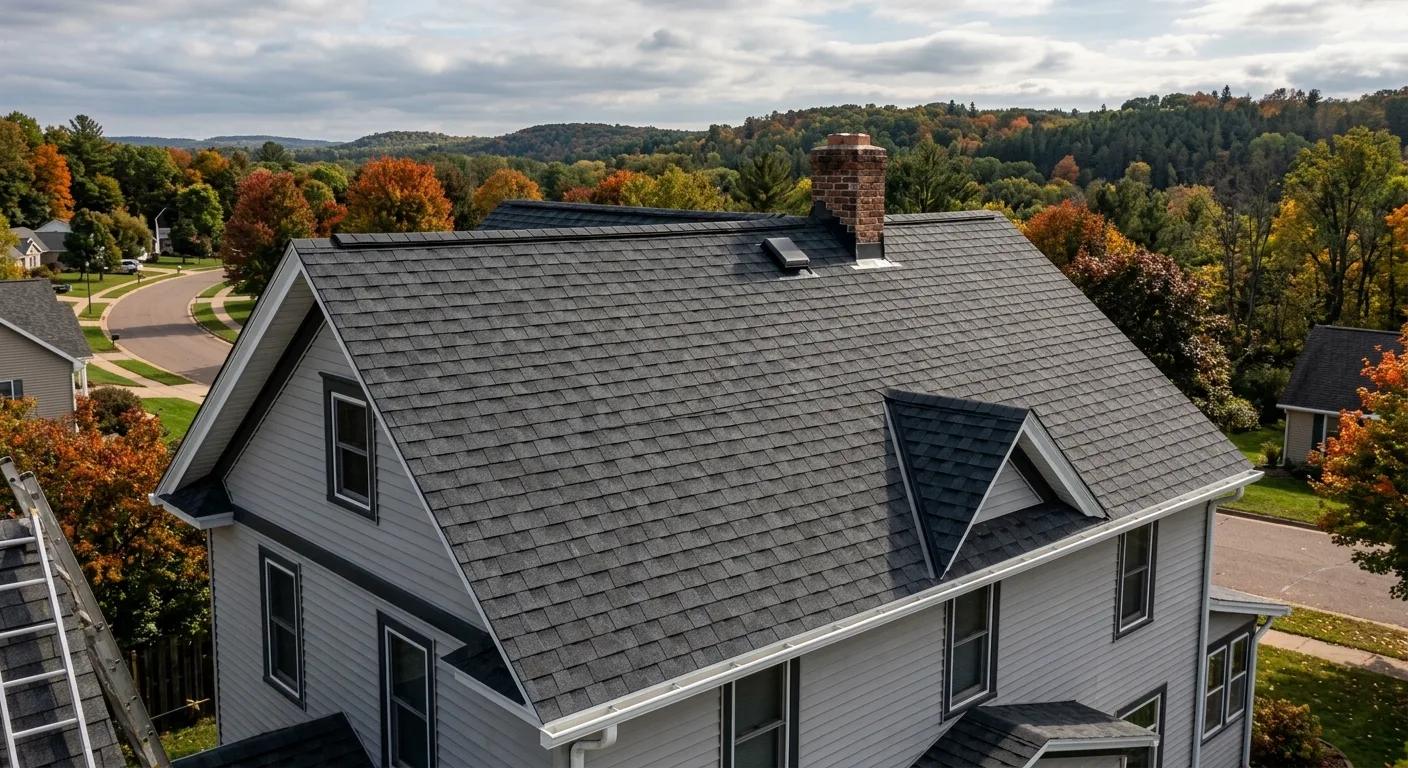
Roofing in Eau Claire, WI has to survive a climate that punishes it, and a failed roof here doesn't stay a roofing problem for long. It becomes a framing problem, an insulation problem, a mold problem. At Midwest Home Improvements we get on the roof, trace the actual failure, and tell you whether a repair holds or a replacement is the honest call, because we've been scoping and reroofing homes across the Chippewa Valley since 1993. Owner Stephen Bonander has 33 years in the trade and is on the roofs we take on, so you get a straight answer before a small issue turns into a much larger repair bill. Call (715) 894-1120 to schedule your estimate.
A roofing job is priced by the square (100 sq. ft.), roof pitch, material type, and what's found once the old material comes off. Asphalt shingles on a straightforward ranch home sit at one end of the range. Steep-pitch roofs, metal standing seam panels, or roofs with significant decking damage push the cost considerably higher. The market range for a full residential replacement runs from roughly $5,000 to $25,000 or more depending on size, condition, and materials. Repairs are generally far less, but the only honest way to price a repair is to see it. Every job is different. Contact Midwest Home Improvements for an accurate estimate.
Free, no-pressure estimates — talk to a real person today.
Our roofing services in Eau Claire cover the full range of residential work:


We also work alongside our seamless gutters service when drainage issues are part of the problem. If water is getting in, we'll find out where and fix it properly. We don't patch over a systemic problem and call it done.

At Midwest Home Improvements, we keep up with local zoning ordinances, building permit requirements, and homeowners association guidelines throughout the communities we serve, from Altoona and Chippewa Falls to Menomonie and Fall Creek. A roofing job that skips permits can void your homeowner's insurance coverage and create problems when you sell. We pull the permits that are required. Every time. If your HOA has material or color restrictions, we sort that out before we order anything.
A few signs that waiting is the wrong call:
Wisconsin winters are hard on roofing systems. Ice dams force water under shingles in ways that don't show up until spring, and by then the damage is already done. You don't need to wait for an active leak to schedule a roof inspection. A quick look now is cheaper than emergency work in February. Call (715) 894-1120 to set up a time that works for you.
Most homeowners in the Eau Claire area choose between two asphalt shingle types, and the right call depends on your roof's exposure and how long you plan to stay in the home. Western Wisconsin sits in a ground snow load zone of roughly 30 to 40 pounds per square foot, and Chippewa Valley roofs cycle above and below freezing dozens of times each winter. That repeated expansion and contraction is what cracks brittle shingles at the edges and valleys first. That's exactly where wind-driven rain and snowmelt get in, so material choice matters more here than in a milder climate.
3-tab shingles lay flat, cost less per square, and typically carry a wind rating around 60 mph. They're a reasonable choice on a low-slope ranch that's sheltered from the prevailing wind, or when you're preparing a home for sale and want a sound roof without paying for the longest-lived material. In our 33 years working roofs from Altoona to Menomonie, we've seen 3-tab roofs run 15 to 20 years when the attic underneath is well ventilated.

Architectural shingles, also called dimensional shingles, are thicker, laminated in two layers, and rated for higher wind speeds, commonly 110 to 130 mph depending on the line. Wisconsin's residential wind design zone runs around 90 to 115 mph, so on an exposed roofline a 3-tab is closer to its limit than most homeowners realize. Architectural shingles cost more per square, but they hold up better against the freeze-thaw cycling and the ice-dam pressure that define a Wisconsin winter, and most architectural roofs run 25 to 30 years here with proper ventilation.
Building a roof to resist ice dams is not just about the shingle. On the roofs we reroof in this climate, we run a self-adhering ice-and-water membrane up from the eave past the interior wall line, keep the attic cold with balanced intake-and-exhaust ventilation so snow doesn't melt from below, and tie the roof edge into the home's gutter and drainage system so meltwater actually gets off the eave the moment it thaws. A thicker architectural shingle over that assembly is what we install on most exposed Eau Claire rooflines that catch the northwest wind off open ground, because the freeze-thaw punishment out here chews through cheaper 3-tab at the edges years before its time.
We don't push the pricier option by default, though. On the right roof, a well-installed 3-tab does its job. We'll tell you which one actually fits your pitch, your exposure, and how long you plan to own the home. If you want the full breakdown before we come out, read our guide on architectural vs 3-tab shingles for Wisconsin roofs, or our explainer on why Chippewa Valley roofs leak in winter. Call (715) 894-1120 and we'll walk you through it on-site.
A roof leak doesn't always mean you need a new roof, and it doesn't always mean a quick patch will hold. The right answer comes from finding where the water is actually getting in, and across the Chippewa Valley three sources account for most of the leaks we chase.
Ice-dam leaks are the most common by far in this climate. When attic heat melts snow that refreezes at the cold eave, water backs up under the shingles and finds its way through, usually showing up as ceiling stains in late winter. Flashing failures are next: the metal that seals chimneys, valleys, skylights, and vent pipes is where leaks start far more often than the shingle field itself, and failed flashing is frequently a repair rather than a full replacement. Decking rot is the serious one. When water has been getting in for a while, the plywood or board decking underneath goes soft, and once it's compromised over any real area, patching the surface won't hold because there's nothing solid left to fasten to.
This is why we get on the roof and trace the leak to its source before quoting anything. A stain over your bedroom might come from a flashing joint that failed six feet away, because water travels along the decking before it drips. Tearing off shingles above the stain and hoping is how a leak gets patched twice and still comes back.
Repair beats replacement when the shingles still have years of life left, the leak traces to an isolated failure like a single flashing joint or a few wind-lifted shingles, and the decking under the problem area is still solid. As we noted in our process above, rotted decking gets replaced before any new material goes on, so if we open up the surface and the sheathing is soft across a wide area, a targeted repair stops making sense. Replacement is the right call when the shingles are original and 20-plus years old, granule loss is widespread, you're seeing leaks in more than one place, or the decking has failed over a significant area. In those cases a series of repairs usually costs more over the next decade than doing it once, correctly.
Either way, the only honest way to price a leak is to see it. Call (715) 894-1120 or send us a message and we'll find the source before we quote a fix.
Honest advice and a clear estimate — no pressure, no obligation.
We come out, get on the roof, and tell you what we see. No vague reports, no pressure. You'll know what needs to be done and roughly what it costs before we schedule any work.
We'll walk you through material options that fit your budget and your roof's pitch and structure. Not every material works on every roof. We'll tell you what's appropriate for your specific situation.
We remove the old roofing and inspect the decking underneath. Rotted or soft decking gets replaced before new material goes on. Covering up bad decking is how a 20-year roof fails in 8.
We install to manufacturer specifications so warranty coverage stays intact. When we're done, the job site is cleaned up. Nails in the yard and debris in the gutters are not how we leave a property.
Our Work


Reviews
We've been the company homeowners turn to for roofing across western Wisconsin since 1993. Here's what some of them have said.
Stephen and his crew replaced our entire roof after a bad hail storm. They pulled the permit, handled everything with our insurance adjuster, and finished in one day. No surprises on the final bill.
I had two other contractors look at a leak over our master bedroom. Both gave vague answers. Midwest Home Improvements found the source in about 20 minutes and fixed it the same week. Honest people.
They've done our roof, our gutters, and our windows over the past few years. Every time, they showed up when they said they would and stayed within the budget we discussed.
Whether you're dealing with a leak right now or you want a professional set of eyes on a roof that's getting up in age, Midwest Home Improvements is ready to help. When a re-roof turns into siding, windows, and gutters too, we run it as one job through our general contractor service in Eau Claire, and we also offer complete home remodeling if your project goes beyond the roof. Call (715) 894-1120 or send us a message and we'll get back to you quickly.
Request a free estimate
Tell us about your project — we'll be in touch within one business day.
Good to Know