
Site Assessment
We look at the existing surface, grade, drainage, and soil conditions. Any issues that would cause cracking or settling get flagged before we talk price, not after we've started.
Eau Claire, WI · Trusted Home Improvement Since 1993
Stamped and colored concrete patios, driveways, and walkways done right. 33 years of experience. Honest estimates, no surprises. Call [(715) 894-1120](tel:+17158941120).
BBB Accredited · Licensed & Insured · Free Estimates
Or call directly: (715) 894-1120
Midwest Home Improvements
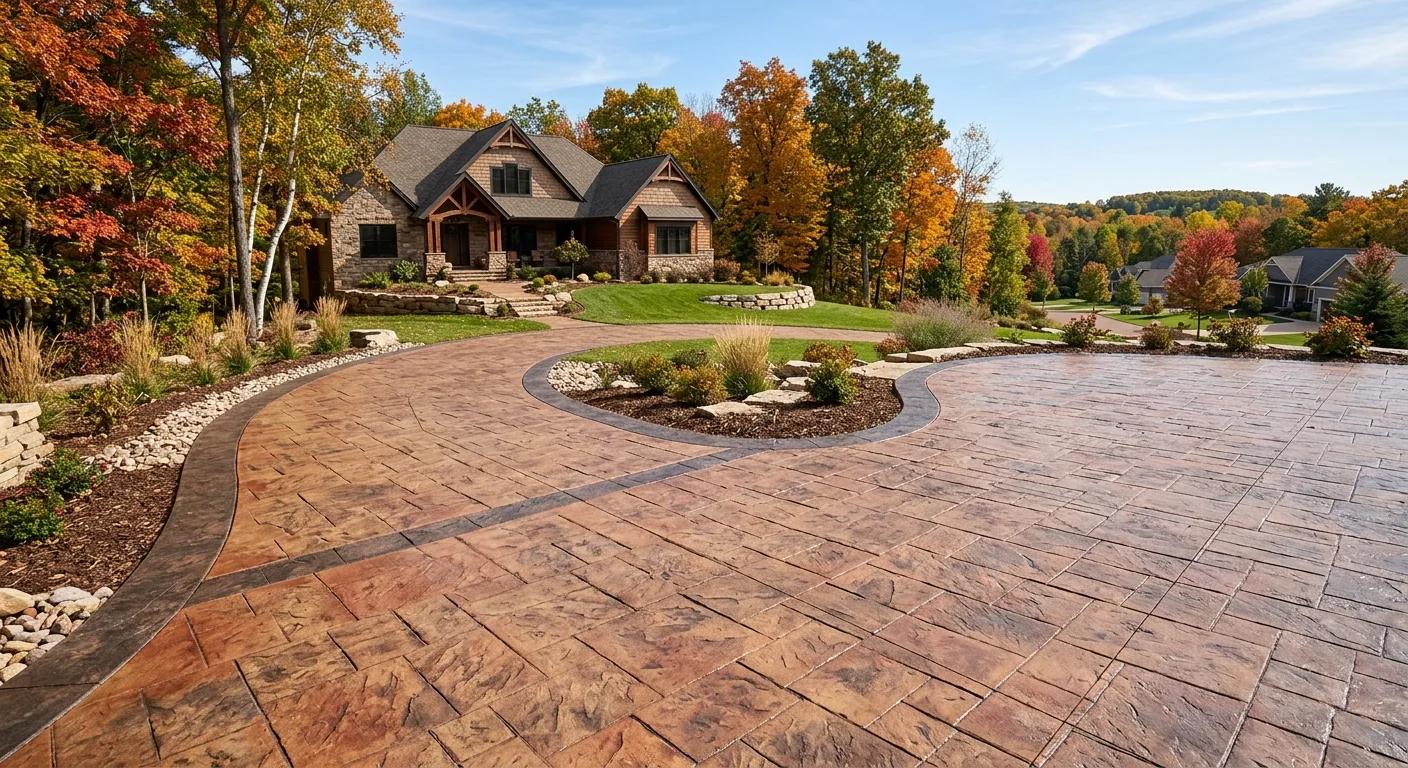
Yes, stamped concrete can be colored, and when both are done together the results can be striking. The short answer to what most homeowners are really asking: stamped and colored concrete gives you the look of natural stone, brick, or slate at a fraction of the cost, but only if the work is done right from the pour up. Midwest Home Improvements has been doing this work for over 33 years, and the biggest mistakes we see come from skipping the base prep or rushing the sealing stage. We don't skip either. Call (715) 894-1120 for a straight answer on what your project will take.
The process starts well before any concrete is poured. Subgrade preparation, proper mix design, and the timing of the stamping all determine whether you get a surface that looks sharp in five years or one that's cracked and faded in two. Color is either mixed into the concrete itself (integral color), broadcast as a hardener on top, or applied as an acid stain after the fact, and each method has trade-offs in durability and appearance. A 20x20 patio, which is the most common size we quote, can range from roughly $2,000 to $8,000 or more depending on the pattern complexity, color method, site access, and how much demolition the existing surface requires. Every job is different. Contact Midwest Home Improvements for an accurate estimate.
Free, no-pressure estimates — talk to a real person today.
The stamp pattern is the last ten minutes of a job that takes hours of prep. Grading, compacting the base, setting forms, getting the mix right for Wisconsin's freeze-thaw cycle, timing the pour for temperature and humidity: all of that happens before anyone touches a stamp mat. If any of those steps are rushed, the pattern won't hold, and no amount of sealer fixes a concrete slab that moved because the base wasn't compacted. We've been pouring and finishing concrete in this region long enough to know the conditions that cause failures, and we build the process around avoiding them.

Each coloring method produces a different look and has a different maintenance profile. Integral color is mixed throughout the entire slab, so chips and cracks don't reveal a gray interior. Broadcast color hardeners are shaken onto the surface before stamping and pressed in, producing deeper, more vivid tones. Acid stains react chemically with the concrete itself and create a variegated, mottled look that's genuinely difficult to replicate with any other method. Honestly, most homeowners default to integral color because it's the most forgiving long-term, but the right choice depends on your pattern and how much variation you want in the finished surface. We'll walk you through the options before any decisions are made.

We look at the existing surface, grade, drainage, and soil conditions. Any issues that would cause cracking or settling get flagged before we talk price, not after we've started.
You pick the stamp pattern and color from real samples, not just a brochure. Common choices in the area include ashlar slate, cobblestone, and wood plank, but there are dozens of options.
Timing is everything. We monitor the concrete for the right surface firmness before stamping begins. Too early and the pattern blurs. Too late and it won't press cleanly. There's no redoing it once the window closes.
A quality penetrating or film-forming sealer protects the color and the surface from road salts, UV, and moisture intrusion. This step determines how long the finished product actually looks good. We don't skip it and we don't use the cheap stuff.
Stamped concrete is not maintenance-free. The sealer needs reapplication every two to three years in Wisconsin's climate, and if you skip that cycle the color fades and surface spalling starts. It's also less forgiving than plain concrete when it does crack, because the pattern makes cracks more visible. De-icing salts are hard on the finish, and you'll want to switch to sand in the winter. None of that should be a dealbreaker, but any contractor who doesn't mention it upfront is telling you what you want to hear, not what you need to know. If you're comparing this to a deck and railing project in terms of long-term maintenance, they're actually pretty similar when properly maintained.
Honest advice and a clear estimate — no pressure, no obligation.
Our Work


Reviews
Stephen and his crew did our backyard patio in a flagstone pattern with a charcoal integral color. The work was clean, they finished on schedule, and the patio still looks exactly like it did on day one three years later. No cracks, no fading.
We got three quotes and Midwest was the only contractor who explained the sealing process in detail and told us what we'd need to do to maintain it. That honesty sold us. The finished driveway looks incredible.
Thirty-three years in the trade means we've seen every site condition and every job that went sideways because someone cut corners on prep. We don't do that. Call (715) 894-1120 or reach out online and tell us what you're working with. We'll give you an honest number and a clear picture of what the project involves.
Request a free estimate
Tell us about your project — we'll be in touch within one business day.
Good to Know